Hidradenitis Suppurativa: The Wegovy Way
My first experience with Wegovy as a hidradenitis suppurativa sufferer and how it's affecting my body today.
Why I’m Taking Wegovy
Living With Hidradenitis Suppurativa
I have hidradenitis suppurativa, stage 2. Living with it means constantly thinking about things most people never have to worry about: what I eat, how much I sleep, what clothes I wear, how stressed I am, and whether any of those things might trigger a flare.
The disease itself isn’t just painful — it’s disruptive. When cysts appear in the armpits, sleeping becomes difficult. When they appear in the groin or buttocks, even sitting can become painful. After decades of dealing with this and going through several surgeries, avoiding those situations has become something close to an obsession.
Over time one factor has stood out more clearly than anything else: body fat percentage. The lower my body fat is, the less often I get flares.
One explanation involves TNF-α, an inflammatory protein strongly associated with hidradenitis. Fat tissue is one of the places where TNF-α activity tends to be higher. Since people with HS already have elevated inflammatory signalling, carrying more body fat seems to make flare-ups easier to trigger.
Because I’m stage 2, keeping inflammation under control matters a lot. Surgery is something I really want to avoid repeating.
Why Fat Loss Matters So Much
For years the only reliable way I’ve found to manage this is by maintaining a relatively low body-fat percentage. The approach that works best for me is strength training. Building muscle makes it much harder for the body to accumulate fat, so keeping muscle mass high has always been part of the strategy.
I’ve been going to the gym consistently both before and after my last surgery. The goal wasn’t to become particularly big or strong — it was simply to keep fat levels low enough to reduce the chances of another flare.
But lately the strategy has started to run into a problem.
When Dieting Stops Working
I started doing cycles of bulking muscle and cutting fat more than six years ago. Back then, losing weight was relatively straightforward. I could drop around 20 kg in about three months without much trouble.
Hunger was never the limiting factor. My usual method was simple: I would start a cut with a 24-hour dry fast, which effectively reset my appetite and made the rest of the diet easy to maintain.
At 40, that approach doesn’t work anymore.
Part of the problem is medication. One of the drugs I take every day needs to be taken with roughly 400 calories of food, and it has to be taken at about the same time each day. That alone breaks the fasting routine that used to work so well.
Another complication comes from ADHD medication. I alternate between Elvanse and Medikinet, and both of them interact poorly with many of the supplements I used to rely on during cutting phases. Stimulants like caffeine or synephrine interfere with them, while other supplements such as forskolin or L-carnitine tend to create unpleasant side effects or blunt their effect.
Because of that, aggressive dieting isn’t really an option anymore. The only realistic strategy left is a slow caloric deficit.
Unfortunately that creates another issue.
The Inflammation Problem
The longer I stay in a dieting phase, the more likely it becomes that inflammation ramps up and cysts start appearing again.
I’ve experimented with a lot of different approaches: alternating weeks of dieting and normal eating, slower cuts, different calorie cycles. None of them solved the problem consistently. Eventually a cyst would appear and I’d have to abandon the cut entirely and go back to maintenance or bulking.
Over time the result of this cycle has been predictable.
I now weigh 97 kg, and while a lot of that is muscle, it’s also more mass than I ever intended to carry. Being heavier is starting to affect my back, and if I don’t interrupt this cycle it will only get worse.
Why I Decided to Try Wegovy
For a long time I’ve been following the research around semaglutide and other GLP-1 medications. Wegovy is essentially the weight-loss version of semaglutide — the same active ingredient used in Ozempic, but dosed specifically for obesity treatment.
Most people think of these drugs purely as appetite suppressants, but they actually do several things at once. They reduce appetite, slow stomach emptying, regulate blood sugar, and may also have anti-inflammatory effects.
That last point is what caught my attention.
If semaglutide really does reduce inflammatory signalling, it might help keep TNF-α activity lower while I’m dieting. In theory that could allow me to stay in a caloric deficit long enough to lose fat without triggering another hidradenitis flare.
Starting Dose
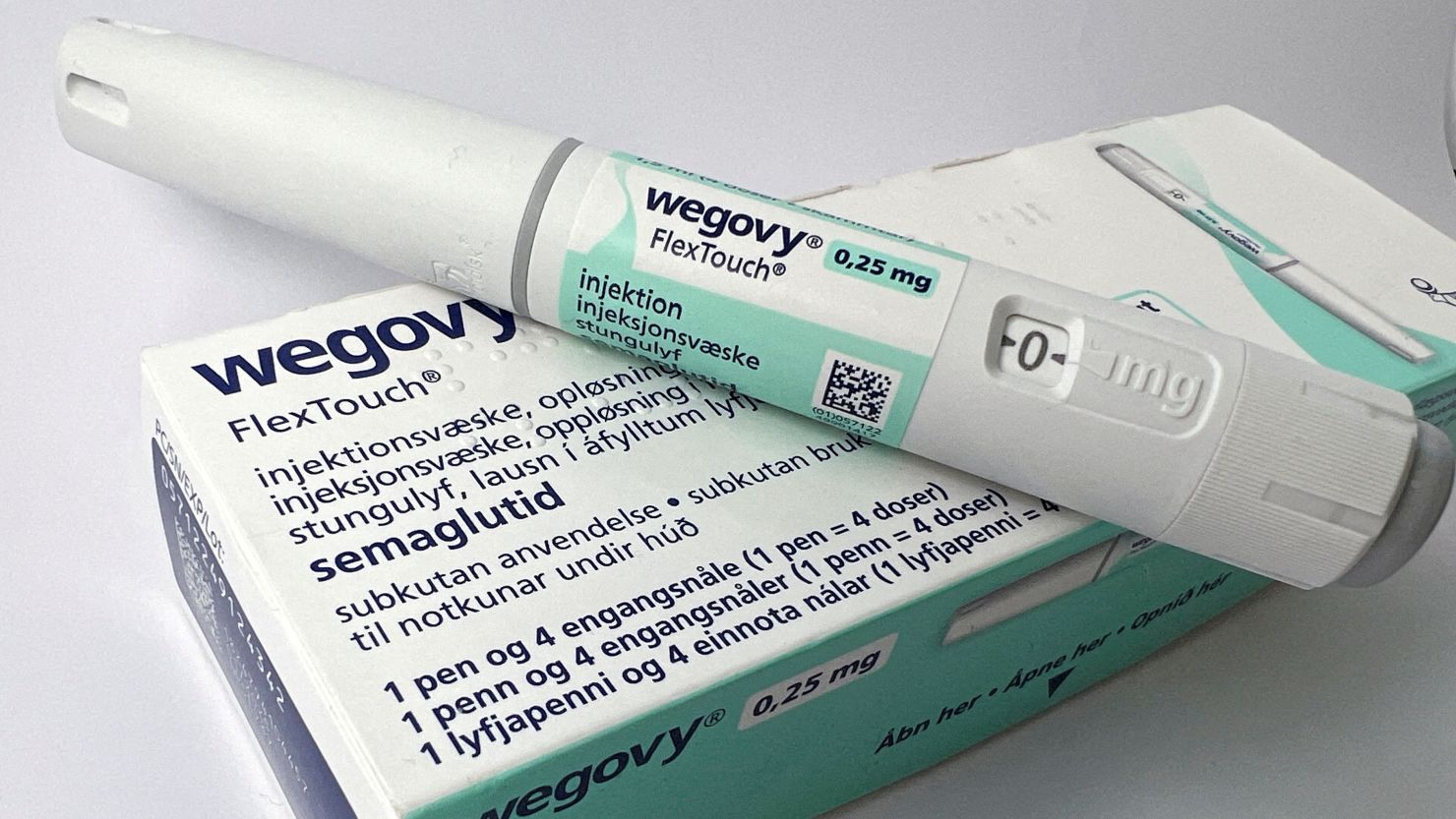
Last night I took 0.25 mg, which is the lowest available dose. This is the standard introductory dose used to let the body adjust before increasing it.
For now I’m deliberately staying low. I’m not actually looking for extreme appetite suppression. Hunger was never my biggest obstacle. What I’m really interested in is whether the medication can make dieting less inflammatory.
If the lowest dose already helps, I might never need to increase it.
Day One: What It Felt Like
The Morning
The first thing I noticed when I woke up was that I felt less hungry than usual. That’s one of the most commonly reported effects of GLP-1 drugs, so it wasn’t surprising.
My energy at the gym, however, was strange.
I had no problem getting up, preparing for the gym, and starting my workout. But halfway through my deadlift session I suddenly felt completely drained. My routine always begins with the two most important exercises in case I have to cut the session short, and that’s exactly what happened.
It was back day, and I managed to complete six total sets across two exercises. After that I was done.
I sat on a recumbent bike at the lowest resistance for about twenty minutes while my partner finished training. Even walking to the showers felt unusually heavy.
Another odd detail was body temperature. I had to wear my thick winter jacket on the way to the gym even though I’m usually someone who runs hot. My hands felt freezing the entire time.
That said, I’m not sure I can blame semaglutide for that. Something similar has happened before when Elvanse peaks during heavy workouts, especially on deadlift or leg days. Today I took it earlier than usual because GLP-1 drugs slow digestion, and the timing might simply have been off.
So that part remains a question mark. 2
Midday
After leaving the gym and have some sugary drink to counteract the low-blood sugar effect, I felt fine again and I remembered I had a lunch meeting with my former boss on the other side of the city. Getting there required walking uphill at a pretty fast pace, which surprisingly felt completely fine.
The interesting part happened when I sat down to eat.
Normally after a workout I’m ravenous. Instead I ordered two chicken fillets and a Mediterranean salad, and that was more than enough. The feeling was very similar to what happens after my usual 24-hour fasting reset, except this time I hadn’t fasted.
Something else felt different too.
People often describe GLP-1 medications as eliminating “food noise”. In my case it feels more like all mental noise is reduced. My brain simply feels calmer and more controlled.
Some people with ADHD report something similar on these drugs, and that description matches what I’m experiencing surprisingly well.
Digestion
So far there have been no digestive issues. If anything, my stomach actually feels better than usual. By this time of day I’m normally a bit bloated, but today that hasn’t happened.
What I Actually Ate Today
Despite going to the gym, my total intake so far has been fairly small. I’ve had a protein shake with creatine, two chicken fillets, a Mediterranean salad with olive oil and vinegar, and a few drinks throughout the day: an orange Fanta, a sugar-free Aquarius, a glass of Albariño wine, and a small espresso.
The espresso was necessary — my digestion is already slow even without semaglutide, and I suspected those chicken fillets might otherwise stay in my stomach until next year.
Interestingly, the salad tasted fantastic, while the heavier dishes on the menu looked strangely unappealing. That’s very unusual for me after training. Normally after deadlifting 80 kg for three sets of ten repetitions, I feel like I could eat an entire cow, farmer included.
Mood and Energy
Mood-wise I feel calm and focused, without any irritability.
Energy levels are harder to judge because the early gym crash complicates things. But after drinking the Fanta I recovered quickly, and walking uphill across the city didn’t feel difficult at all. Now, late in the afternoon, I also haven’t experienced the usual crash that tends to happen after lunch.
Interaction With ADHD Medication
Today wasn’t the ideal test because Elvanse peaked earlier than expected.
Normally I alternate between Elvanse (50 mg) and Medikinet (60 mg). For reasons I still don’t fully understand, both medications seem to work better for me when they’re alternated instead of taken continuously. It is as if I develop tolerance if I continue with the same but not when I alternate.
Tomorrow I’ll repeat the experiment with Medikinet and see whether the experience feels different. Back on Elvanse the day after I will take it later.
Realistically it will probably take several days before I can separate normal fluctuations from actual effects of the medication.
Early Thoughts
It’s obviously far too early to draw strong conclusions, but the first day with Wegovy has been interesting.
The most noticeable differences so far are the near absence of cravings, a much smaller appetite after training, and a general sense of mental quietness that I didn’t expect and are making me considering even trialing a few days ADHD meds free.
If those effects remain consistent over time, semaglutide might finally make it possible to lose fat without triggering hidradenitis flare-ups. And if that turns out to be true, it could change the way I manage this disease entirely. Reducing the time left to achieve 11% body fat and forget about it for good to merely months.
Reactions
No webmentions were found.